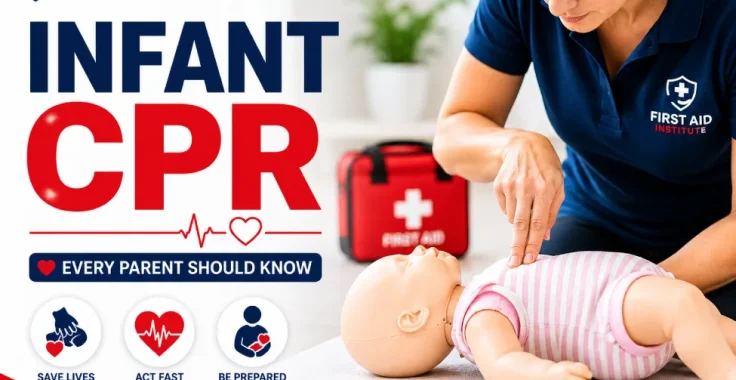
As parents and caregivers, we do everything possible to keep children safe. However, emergencies can happen unexpectedly, and knowing how to respond can make all the difference.
Infant CPR is one of the most valuable life-saving skills a parent can learn. In a critical situation, the ability to act quickly and confidently may help protect a child’s life while waiting for emergency medical services to arrive.
What Is Infant CPR?
Infant CPR (Cardiopulmonary Resuscitation) is an emergency procedure used when a baby under one year old stops breathing normally or becomes unresponsive.
CPR helps maintain blood circulation and oxygen flow to the brain and vital organs until professional medical help arrives.
Because infants are physically different from adults and older children, CPR techniques must be adapted specifically for their size and developmental stage.
Common Infant Emergencies
Several situations may require immediate intervention, including:
- Choking
- Drowning incidents
- Suffocation
- Severe allergic reactions
- Respiratory distress
- Cardiac emergencies
- Serious injuries
Recognizing these emergencies early can significantly improve outcomes.
Signs That An Infant Needs Emergency Help
Seek immediate assistance if an infant:
- Is unresponsive
- Stops breathing normally
- Has blue or gray lips and skin
- Shows no signs of movement
- Cannot cry or make sounds
- Appears unconscious
When in doubt, always call emergency services immediately.
Why Infant CPR Is Different
Infants have smaller airways, more delicate bones, and different breathing patterns than adults.
As a result:
- Chest compressions are performed using two fingers or thumbs
- Compression depth is shallower
- Rescue breaths require less air
- Airway positioning is adjusted carefully
Using adult CPR techniques on an infant can be ineffective or potentially harmful.
Preventing Choking Emergencies
Choking is one of the most common emergencies involving infants.
To reduce risks:
- Keep small objects out of reach
- Avoid foods that present choking hazards
- Supervise children during meals
- Follow age-appropriate feeding guidelines
- Learn infant choking response techniques
Prevention is always the first line of defense.
The Importance Of CPR Training
Reading about CPR is helpful, but hands-on training provides the confidence and practical experience needed during real emergencies.
Professional training allows parents and caregivers to:
- Practice CPR techniques safely
- Learn proper emergency response procedures
- Understand choking relief methods
- Receive guidance from experienced instructors
- Build confidence in emergency situations
The more prepared you are, the more effectively you can respond when every second matters.
Who Should Learn Infant CPR?
Infant CPR training is highly recommended for:
- Parents
- Grandparents
- Babysitters
- Nannies
- Childcare providers
- Teachers
- Foster parents
- Healthcare professionals
Anyone responsible for caring for children can benefit from these life-saving skills.
Creating A Safer Environment At Home
While emergencies cannot always be prevented, families can reduce risks by:
- Childproofing the home
- Keeping emergency numbers accessible
- Maintaining a first aid kit
- Learning CPR and first aid skills
- Supervising infants during meals and playtime
Preparation and awareness work together to create a safer environment for children.
Final Thoughts
No parent ever wants to imagine a medical emergency involving their child. However, being prepared can make an enormous difference when unexpected situations occur.
Learning infant CPR provides valuable knowledge, practical skills, and peace of mind. By taking a CPR course and understanding how to respond during emergencies, parents and caregivers can be better prepared to protect the children in their care.
A few hours of training today could help save a life tomorrow.