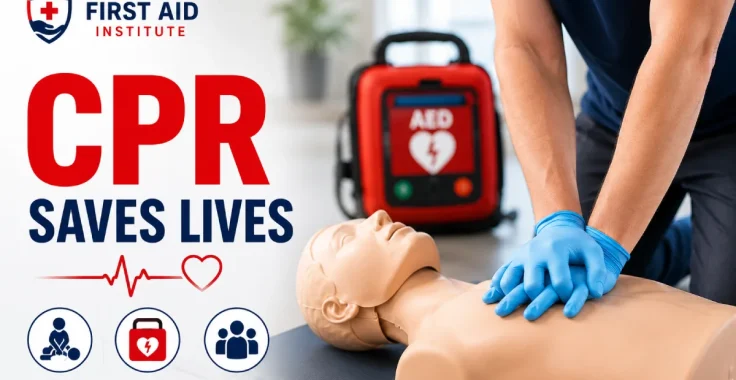
Cardiac arrest is one of the most serious medical emergencies a person can experience. It can happen without warning, affecting people of all ages and backgrounds. When cardiac arrest occurs, every second counts. Immediate CPR can mean the difference between life and death.
Understanding what cardiac arrest is, how CPR works, and why prompt action matters can help save lives in an emergency.
What Is Cardiac Arrest?
Cardiac arrest occurs when the heart suddenly stops pumping blood effectively throughout the body. When this happens, oxygen-rich blood no longer reaches the brain, lungs, and other vital organs.
Without immediate intervention, permanent brain damage can begin within minutes, and survival becomes increasingly unlikely.
Common signs of cardiac arrest include:
- Sudden collapse
- Loss of consciousness
- No normal breathing
- No pulse
- Unresponsiveness
Cardiac arrest is different from a heart attack. A heart attack is caused by blocked blood flow to part of the heart muscle, while cardiac arrest is an electrical problem that causes the heart to stop beating effectively.
Why Immediate Action Matters
When someone experiences cardiac arrest, survival decreases by approximately 7% to 10% for every minute that passes without CPR or defibrillation.
Emergency medical services are vital, but they may take several minutes to arrive. During this critical period, bystanders can play a life-saving role.
By calling 911, starting CPR immediately, and using an AED if available, you can significantly improve a person’s chances of survival.
How CPR Works
CPR stands for Cardiopulmonary Resuscitation.
CPR combines chest compressions and rescue breathing to help maintain blood flow and oxygen delivery when the heart has stopped functioning properly.
Chest compressions help:
- Push blood to the brain
- Circulate oxygen to vital organs
- Maintain some level of blood flow
- Buy time until advanced medical care arrives
Even though CPR cannot restart the heart on its own, it helps preserve organ function and increases the effectiveness of later treatments such as defibrillation.
The Importance of Chest Compressions
High-quality chest compressions are the foundation of effective CPR.
Proper chest compressions should:
- Be hard and fast
- Allow complete chest recoil
- Minimize interruptions
- Continue until help arrives or the person recovers
For untrained rescuers, Hands-Only CPR is often recommended. This involves continuous chest compressions without rescue breaths.
Hands-Only CPR is simple, effective, and can be performed by almost anyone.
What Is an AED?
An Automated External Defibrillator (AED) is a portable device designed to analyze the heart’s rhythm and deliver an electrical shock if necessary.
AEDs are commonly found in:
- Schools
- Airports
- Shopping centers
- Sports facilities
- Workplaces
- Community buildings
AEDs provide step-by-step voice instructions and are designed for use by both trained and untrained individuals.
When CPR and AED use are combined quickly, survival rates can increase dramatically.
Steps to Take During Cardiac Arrest
If you encounter someone who suddenly collapses and is unresponsive:
1. Check Responsiveness
Tap the person’s shoulders and shout to see if they respond.
2. Call 911
Activate emergency medical services immediately or ask someone nearby to call.
3. Begin CPR
Start chest compressions in the center of the chest.
4. Retrieve an AED
If an AED is available, have someone bring it while CPR continues.
5. Follow AED Instructions
Turn on the AED and follow its voice prompts.
6. Continue Care
Continue CPR until emergency responders arrive or the person begins to recover.
Who Should Learn CPR?
Everyone can benefit from CPR training.
CPR skills are particularly valuable for:
- Parents and guardians
- Teachers and school staff
- Childcare providers
- Healthcare professionals
- Caregivers
- Coaches and sports staff
- Workplace safety personnel
- Community volunteers
You never know when an emergency may occur, and being prepared can help save a life.
The Value of CPR Training
Professional CPR training provides hands-on practice, instructor guidance, and the confidence needed to respond effectively during real emergencies.
Participants learn how to:
- Recognize cardiac arrest
- Perform high-quality CPR
- Use an AED safely
- Respond to choking emergencies
- Provide basic first aid
These practical skills can make a significant difference when every second matters.
Final Thoughts
Cardiac arrest can happen anywhere and at any time. Immediate CPR helps keep oxygen-rich blood flowing to the brain and vital organs until professional medical help arrives.
By learning CPR and understanding how to respond during an emergency, you can become an important link in the Chain of Survival and potentially save a life.
The best time to learn CPR is before an emergency happens. Proper training can provide the knowledge, confidence, and skills needed to act quickly when someone needs help the most.